Endida
Who we help
01iGaming Operators & Platforms02Financial Services, Payments & Fintech03MLROs & Compliance Leaders04Cyber & Security Leaders
Solutions
Financial crime, fraud and safer gamblingFraud protectionAML and transaction monitoringSafer gamblingKYC and screeningBlockchain intelligence
Compliance capacity and assuranceiGaming compliance and 1LoDEU AMLR readinessCrypto and VASP complianceEnhanced due diligenceRegTech gap analysisThird party riskOperational resilience
CyberPenetration testingThreat intelligenceHuman riskSecure web gatewayIncident responseAI governance
Insights About Book a Conversation
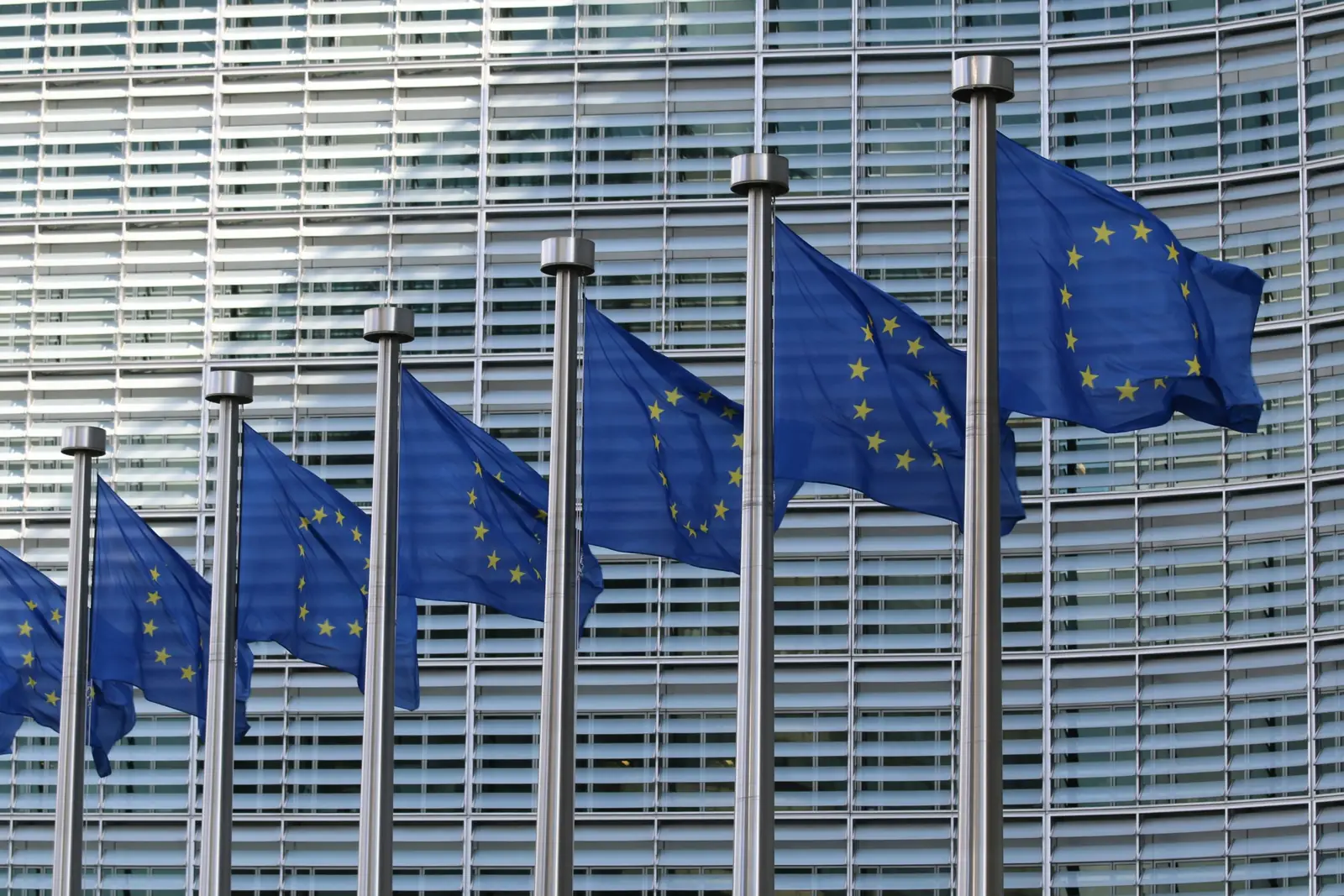
EU flags outside the European Commission building in Brussels
Photo: Guillaume Périgois on Unsplash
EU AML Regulation · Regulation (EU) 2024/1624

AMLR for iGaming:
what changes on 10 July 2027.

From 10 July 2027 one regulation sets the core anti-money laundering rules for every gambling operator licensed in the EU. This guide covers what the AMLR changes for operators and the platforms behind them, who it catches (including UK, Gibraltar and Channel Islands groups with EU licences), and what to do about it.

10.07.27
AMLR applies across the EU
€2,000
Gambling CDD threshold on stakes or winnings
€10,000
EU-wide cap on cash payments to traders
1 yr
Maximum review cycle for higher-risk customers
In short

What is the AMLR?

The Anti-Money Laundering Regulation (AMLR), Regulation (EU) 2024/1624, is part of the EU AML package published in June 2024 alongside the Sixth AML Directive (AMLD6) and the regulation creating the EU Anti-Money Laundering Authority (AMLA). Because it is a regulation rather than a directive, it applies directly in every Member State from 10 July 2027, replacing much of the national rulebook firms work to today.

It sets common rules on customer due diligence, beneficial ownership, ongoing monitoring, internal controls and reporting, with detailed technical standards from AMLA. For most firms the change is less about new concepts and more about evidence: consistent thresholds, fixed review cycles, named accountability and controls you can show working.

AMLR for gambling operators

What the AMLR means for iGaming.

Gambling service providers are obliged entities under the AMLR, and online operators are among the firms that cannot be exempted. Five things change for operators and the platforms behind them.

Article 19(5)

Due diligence at €2,000, stake or payout

Operators must apply customer due diligence when a player wagers a stake, collects winnings, or both, of €2,000 or more. The threshold counts linked transactions as well as single ones, so activity spread across sessions, days or payment methods has to be added up rather than looked at one bet at a time.

Article 4

Little room for exemptions

Member States may exempt gambling services of proven low risk, but not casinos, and not providers whose principal activity is online gambling or sports betting unless the service is operated or regulated by the State. Licensed online operators should plan on full compliance.

Single rulebook

One standard across your EU licences

Malta, Ireland, the Netherlands, Denmark and every other EU market work to the same core rules. Group operators can run one control framework, but regulators will expect it to work consistently in every market, with national variations only where the regulation allows them.

Article 26

Reviews on a fixed clock

Player information must be refreshed at least yearly for higher-risk players and at least every five years for the rest. VIPs and high-value customers sit squarely in the yearly cycle, with source of funds and source of wealth kept current.

Monitoring and safer gambling

One view of the player

Aggregating linked activity, spotting structuring and refreshing risk when behaviour changes are the same signals safer gambling teams use for affordability and harm. Operators that join AML, fraud and safer gambling on one player risk view avoid doing the work twice.

Linked transactions

The €2,000 threshold is an identity problem.

Structuring around a threshold rarely looks like one large deposit. It looks like several accounts, cards and devices, each staying under €2,000 over a few weeks. The rule only works if you can tell that those accounts belong to one person.

On 1 October 2026 AMLA sent the Commission its final draft standard on how to judge whether transactions are linked. Its criteria read like a multi-accounting checklist, which means duplicate faces, shared devices and reused payment methods can no longer sit in the fraud team's reports while AML screening runs in a different tool.

That makes multi-accounting an AML question, not just a bonus abuse one, and it favours operators who see the player once, from sign-up to deposit to withdrawal, across AML, fraud and safer gambling.

AMLA's linked-transaction criteria (final draft)
  • Same person performing or receiving the transactions
  • Common origin or destination, including customers acting in concert and shared digital infrastructure
  • Same purpose, which for gambling includes games provided by the same provider
  • Common characteristics, including transactions made remotely or at different establishments
  • A short time frame, judged by the speed and frequency of normal activity in your business

Draft standard under AMLR Article 19(9), awaiting Commission adoption.

Online, retail and across brands

The criteria cover transactions made remotely or at different establishments, so a player's online and retail activity counts together where the same licensed entity runs both. Brands operated by the same entity are one business, so the same player across your brands is the same person.

Already happening: Spain

Spain's Royal Decree 813/2026, published on 8 October 2026, requires online operators to verify that the gaming account holder is the same person as the holder of the payment method used to deposit and withdraw. New accounts have been covered since 28 October 2026, and existing accounts have six months, during which winnings cannot be withdrawn until the match is verified.

See it working

Linked, monitored, evidenced.

Three short stories from the FRAML and safer gambling platform we deliver: the €2,000 linked-transaction rule your team builds and puts live on day one, one player read across brands, online and retail, and linked accounts exposed through the network. Every step is explainable and logged.

01 · UKGC and AMLR

Ready for AMLR, UKGC and domestic regimes.

UK financial risk assessments look at net deposits in a rolling window. From 10 July 2027, AMLR applies due diligence at €2,000 of stakes or winnings, including linked transactions, so the same player has to be seen across accounts and brands. Domestic regimes, such as Denmark, the Netherlands and Malta, each bring their own rules on top. Your compliance team builds every one without code, backtests it, and puts it live on its start date. No development release.

  1. UKGC: £5,000 in a rolling 24 hours
  2. AMLR: €2,000 across linked accounts
  3. Know the impact before it goes live
  4. Plan for it, deploy on day one
Shows: one rule set per regime, built by your experts, versioned and approved
02 · Fraud, AML, safer gambling

One player. Every lens.

A third-party card on one brand, cash out in a shop 40 minutes after money in online, failed deposits at 3am. Read apart, nothing crosses an alert level. Read together, it is one player in financial distress, and one case opens.

  1. Read apart, each signal looks minor
  2. Read together, the risk is clear
  3. One case, one player, one audit trail
Shows: signals combined across lenses, brands, online and retail
03 · Network analysis

The account looks clean. The network rarely does.

Linking accounts through shared devices, IPs, cards and addresses, across brands, exposes what no single account shows: money layered through linked accounts, welcome bonuses farmed across brands, and self-excluded players back under another name.

  1. Every account looks clean
  2. Layering through linked accounts
  3. Bonus abuse across brands
  4. Self-exclusion circumvention, prevented
Shows: AML, fraud and safer gambling, found in one network
Illustrative examples. Players and reports are fictional. Financial risk assessment thresholds: source UK Gambling Commission, start dates to be confirmed. AMLR: Regulation (EU) 2024/1624, applies from 10 July 2027.
See it on your own players

Start with a demo. Prove it on your data.

01
Platform demo
One hour

The FRAML and safer gambling platform on your screen rather than in a deck: linked accounts, the €2,000 linked-transaction rule, player risk profiles, case management and the audit trail, walked through against gaming scenarios.

Book a demo
02
Proof of value
Six to eight weeks

One use case, such as linked accounts and AMLR thresholds, run on your live and historical data alongside your existing controls. Measured on what it finds that you miss today, false-positive reduction and coverage gaps.

Ask about a proof of value
For operators

Keep what works. Close the gaps.

Most operators already have KYC, screening and some monitoring in place. The AMLR gaps are usually narrower: linking players across accounts, brands and channels, aggregating towards €2,000, and evidencing it. The stack we deliver is modular, so you add only the capabilities you need, through one API, alongside what you already run.

For platform providers

AMLR-ready for every operator you host.

Platforms are generally not obliged entities in their own right, but their operators are, and AMLR-grade requirements on data, monitoring and audit trails are already appearing in RFPs and contracts. Platforms can add linked-player monitoring and FRAML capability once and offer it across their operator base, deepening what the platform does today rather than building it from scratch.

How we help operators and platforms
Get started

Book a demo or scope a proof of value.

Tell us a little about your business and we will come back within one business day to arrange it.

  • One hour, against gaming scenarios
  • Built around your licences and platform
  • No obligation to take anything further
Thank you. We have your request and will be in touch within one business day.
What changes

Eight AMLR changes iGaming compliance teams will feel first.

The headline obligations, with the article of the regulation each one comes from.

Single rulebook

One regulation, applied directly

Core AML obligations stop depending on how each Member State transposed the directives. Firms licensed in several EU markets work to one set of rules, with less room for national variation.

Article 19

Common CDD thresholds

Due diligence on occasional transactions of €10,000 or more, €1,000 for occasional transfers of funds and for crypto-asset service providers, €3,000 for occasional cash transactions, and €2,000 for gambling stakes or winnings, whether in one operation or linked.

Article 26

Fixed review cycles

Customer information must be updated at least every year for higher-risk customers and at least every five years for everyone else, as well as when relevant circumstances change.

Article 52

Beneficial ownership at 25%

Ownership of 25% or more of the shares or voting rights is a beneficial ownership interest, alongside control through other means. Ownership data needs to be current and evidenced.

Article 11

Named accountability

A member of the management body is appointed compliance manager, and a compliance officer of sufficient standing runs the day-to-day controls and reports to the financial intelligence unit, with adequate staff and technology.

Article 16

Group-wide requirements

Parent undertakings must apply their procedures, risk assessment and staff requirements across subsidiaries and branches, so group policies have to work in every entity, not just head office.

Article 28 standards

Existing customers, not just new ones

AMLA's final draft CDD standards expect existing customer files to be brought up to the new standard on a risk-sensitive basis, higher-risk customers first. Remediation is a capacity question as much as a policy one.

Article 80

€10,000 cash limit

Traders in goods and services cannot accept or make cash payments above €10,000, including linked payments. Member States can set lower limits, and existing lower national limits stay in place.

What it means for you

The AMLR by sector.

Where the regulation bites hardest, and where to see how we help.

01 · iGaming operators & platforms

Full AMLR obligations, with the €2,000 linked threshold at the centre.

  • CDD at €2,000 on stakes, winnings or both, including linked transactions
  • Member States may exempt proven low-risk gambling, but not casinos or private operators whose main activity is online gambling or sports betting
  • One set of rules across your EU licences, so monitoring has to join up across markets
iGaming operators & platforms →
02 · Financial services, payments & fintech

Consistent thresholds, tighter monitoring, and AMLA oversight for the largest groups.

  • CDD on occasional transfers of €1,000 or more
  • Ongoing monitoring and review cycles you can evidence customer by customer
  • Direct AMLA supervision of around 40 high-risk cross-border groups from 2028
Financial services, payments & fintech →
03 · MLROs & compliance leaders

Accountability is named, and the evidence has to hold up.

  • Compliance manager on the management body, compliance officer with real standing
  • Existing customer files to remediate, higher-risk first
  • Rules and decisions you can explain to a supervisor
MLROs & compliance leaders →
UK, Gibraltar, Channel Islands and other non-EU firms

The AMLR does not apply directly outside the EU, but it reaches you if your group has an EU-licensed subsidiary or branch, if an EU parent applies group-wide policies to you, or if EU banks, payment partners and B2B clients expect AMLR-grade due diligence from you as a counterparty.

How Endida helps

AMLR compliance for iGaming: start with the gaps.

Modular by design. Deepen the capabilities already in your stack or close a specific gap, without replacing what works.

Assess

RegTech gap analysis

An AMLR readiness review of your AML, fraud and safer gambling stack against the regulation and your licences. Solution-agnostic, ending in a prioritised plan.

Request a review →
Detect

Modular FRAML capabilities

Take only the modules you need through one API: linked-player and network analysis, transaction monitoring, identity verification with deepfake detection, sanctions, PEP and adverse media screening, and perpetual KYC. Machine learning and no-code rules your own experts run.

See the capabilities →
Resource

Remediation and 1LoD capacity

Experienced KYC and AML analysts for remediation programmes, periodic reviews and alert backlogs, deployable within 24 to 48 hours.

Compliance capacity →
AMLR FAQ

Common questions about the AMLR.

What is the AMLR?

The Anti-Money Laundering Regulation, Regulation (EU) 2024/1624, is the EU's single rulebook for anti-money laundering and counter-terrorist financing. It sets common rules on customer due diligence, beneficial ownership, ongoing monitoring, internal controls and reporting for all obliged entities in the EU, including gambling operators.

When does the AMLR apply?

The AMLR applies from 10 July 2027. It was published in the Official Journal on 19 June 2024 as part of the EU AML package, giving firms three years to prepare.

Does the AMLR apply to iGaming and gambling operators?

Yes. Gambling service providers are obliged entities. They must apply customer due diligence when collecting winnings, wagering a stake, or both, where the amount is €2,000 or more, whether in a single operation or linked transactions. Member States may exempt gambling services of proven low risk, but not casinos or providers whose principal activity is online gambling or sports betting, unless the service is operated or regulated by the State.

What is the AMLR threshold for gambling?

€2,000 or the equivalent in national currency, applied when a player wagers a stake, collects winnings, or both, under Article 19(5). Linked transactions count towards the threshold, so operators need to aggregate activity rather than assess each bet on its own.

Do operators need to aggregate online and retail play, and across brands?

AMLA's final draft criteria for linked transactions include transactions made remotely or at different establishments, so online and land-based activity by the same player should be assessed together where the same obliged entity runs both. Brands operated by the same licensed entity are one obliged entity, so the same player across those brands is the same person. Where brands sit in separate group entities, each entity applies the rules itself, and group-wide policies govern how information is shared.

Do we need to replace our existing AML stack to be AMLR-ready?

Usually not. Most operators already have KYC, screening and some monitoring in place, and the AMLR gaps are narrower: linking players across accounts, brands and channels, aggregating activity towards the €2,000 threshold, and evidencing it. The stack Endida delivers is modular, so operators and platforms can add only the capabilities they need through one API, alongside what they already run.

Is the AMLR relevant to iGaming platform providers?

Yes, indirectly. B2B platform providers are generally not obliged entities in their own right, but the operators they host are, so AMLR-grade requirements on player data, monitoring and audit trails flow into platform RFPs and contracts. Platforms that add linked-player monitoring and FRAML capability can offer it across their whole operator base.

What counts as a linked transaction for gambling under the AMLR?

AMLA's final draft standard under Article 19(9), sent to the European Commission on 1 October 2026, asks firms to make an overall assessment using criteria including transactions by the same person, a common origin or destination such as customers acting in concert or shared digital infrastructure, the same purpose, and a short time frame. Gambling providers must also take into account games provided by the same provider. In practice this means identifying when several accounts, devices or payment methods belong to one player.

Does the AMLR allow remote identity verification?

Yes. Article 22 allows identity to be verified using electronic identification means that meet the eIDAS Regulation (EU) No 910/2014 at assurance level substantial or high, or relevant qualified trust services, alongside verification from documents and reliable independent sources.

Does the AMLR apply to UK, Gibraltar or Channel Islands firms?

Not directly. It applies to EU obliged entities, so it reaches UK, Gibraltar, Guernsey, Jersey and other non-EU groups through their EU-licensed subsidiaries and branches, through group-wide policies set by an EU parent, and through EU banks, payment partners and clients that expect AMLR-grade due diligence from their counterparties.

What is the difference between the AMLR, AMLD6 and AMLA?

The AMLR is a regulation that applies directly to firms and sets their obligations. AMLD6 is a directive that Member States transpose, covering supervisors, financial intelligence units and registers. AMLA is the new EU Anti-Money Laundering Authority in Frankfurt, which drafts technical standards, coordinates national supervisors and will directly supervise around 40 high-risk cross-border financial groups from 2028.

Do existing customers need new due diligence?

AMLA's final draft customer due diligence standards, submitted to the European Commission on 1 October 2026, expect existing customer files to be brought up to the new standard on a risk-sensitive basis, starting with higher-risk customers. Separately, the AMLR requires customer information to be updated at least every year for higher-risk customers and at least every five years for others.

What are the penalties for breaching the AMLR?

Penalties are set in the Sixth AML Directive (AMLD6, Directive (EU) 2024/1640), which each Member State transposes. For serious, repeated or systematic breaches of the AMLR's rules on internal controls, customer due diligence, reporting and record retention, national law must allow maximum fines of at least €1 million or twice the benefit derived from the breach, whichever is higher, for gambling operators and other non-financial obliged entities; at least €10 million or 10% of total annual turnover for banks and financial institutions; and at least €5 million for individuals. Member States can set higher maximums. Supervisors can also issue public statements naming the firm, order corrective measures, suspend or withdraw a licence, temporarily ban managers, and impose periodic penalty payments of up to 3% of average daily turnover until a firm complies.

What is the AMLR cash payment limit?

Persons trading in goods or providing services may not accept or make cash payments above €10,000, including linked payments. Member States can set lower limits, and existing lower national limits continue to apply.

Get AMLR-ready before July 2027.

See the platform in an hour, then prove it on your own player data.